Petter Reinholdtsen

Some of my 2025 free software activities
31st December 2025

I guess it is about time I posted a new summary of the free software and open culture activites and projects I have been involved in the last year. The days have been so packed the last year that I have failed with my intention to post at least one blog post per month, so this summary became rather long. I am sorry about this.

This year was the year I got tired of the lack of new releases of the multimedia related libraries published via Xiph, and I decided to wrap up the current state and make the releases myself. In a burst of activity early this year, I collected and tested patches, coordinated with other developers and finally made new tarballs and release announcement for theora, and new tarball releases for liboggz, kate and fishsound. This upstreamed several patches accumulated in Debian and other Linux distributions for the last 15 years or so.

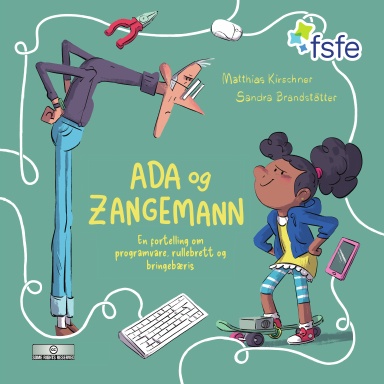
To change the world and the future, it is important to start with the kids, and one such avenue of change have been created by the current president of FSF Europe, Matthias Kirschner. He wrote a book for children, Ada & Zangemann, and I have been involved in its translation framework for the entire year. The source code has been transformed to Docbook and I have been conducting and coordinating translations into Norwegian Bokmål and Nynorsk, as well as preparing paper editions of the book and an animation movie with Norwegian voices. The Bokmål edition is very close to ready, and will be available early in 2026, and the movie release will follow shortly after this. I intend announce this on my blog and elsewhere when this happen. Please get in touch if you want to help spread the word about this book in Norwegian. I hope we can get the author to Norway when making the Norwegian releases.

This year I continued a push for the system I made a few years ago to improve hardware dongle handling on Linux. The Isenkram system use hardware mapping information provided by relevant packages using the AppStream system to propose which Linux distribution packages to install on a given machine to support dongles like cameras, finger print readers, smart card readers, LEGO controllers, ECC memory and other hardware. I have followed up on the list of packages providing such mapping, either to get it into Debian or to upstream the necessary metadata. I am not sure if we are at a point where package maintainers on their own add such information to their packages, but there are Debian lintian reports suggesting it and I have send patches to all packages I am aware of that should include such mappings. Most of the patches are included in Debian now, only 27 was left the last time I checked.

As part of my involvement with Debian, I continued my push to get all orphaned packages without a version control repository migrated to git. I am not sure how many packages I went through, but it was in the range of 200-300 packages. In addition to this I updated, sponsored, pushed maintainers for updates upstreamed patches for and fixed RC issues with battery-stats, bs1770gain, isenkram, libonvif, mfiutil, opensnitch, simplescreenrecorder, vlc-plugin-bittorrent and wakeonlan. I've also followed up LEGO related packages, dahdi support for Asterisk, llama.cpp and whisper.cpp in particular for the AMD GPU I was donated by AMD, as well as tried yet again to convince the upstream developers of the photogrammetric workstion e-foto to get their program into a state that could be included in Debian.

As I do not buy into the story that it is great to expose oneself to the whims of and priorities of commercial entities to have access to cultural expressions like films and music, I still maintain a huge collection of movies. For this to work well, I have ended up as part of the people maintaining lsdvd upstream and wrapped up a new release fixing several crash bugs caused by DVDs with intentionally broken metadata, and introduced code to list a DVD ID in the lsdvd output. Related to this, I have also worked some add-ons for my main video and music player, and took over upstream maintenance of the Invidious add-on, which sadly stopped working for non-authenticated users when web scrapers made it impossible for Invidious installations to provide a open API, as well as contributed to the NRK and projector control add-ons.

As part of my involvement in the Norwegian archiving community and standardisation work, we organised a Noark 5 workshop this spring discussing how to decide what to keep and what to delete in digital archives. We finally managed to apply for Noark 5 certification for the free software archive API Nikita, as well as worked to test and improve the performance of Nikita together with people on my day job at the university.

Manufacturing using Free Software is still a focus for me, and I have continued my involved with the LinuxCNC community, organising a developer gathering this summer with the help and sponsoring from the initial start in 2023 from NUUG Foundation and sponsoring from Debian and Redpill-Linpro. We plan to repeat the event also in 2026, but this time NUUG Foundation have told us they do not want a role, so we have found another friendly organisation to handle the money.

A popular machine controller with LinuxCNC is the MESA set of electronics, which is centred around a FPGA which now can be programmed using only Free Software. We discussed during this summers gathering how hard it would be to compile the current FPGA source using a Free Software tool chain, and I started looking into this, locating tools to transform the VHDL source into something the Yosys tool chain can handle. Still lot to do there, and I hope to get further next year.

An important part of Free Software manufacturing is the ability to design parts and create programs that can be passed to machines making parts, also known as CAD/CAM. The most prominent project for this is FreeCAD, and I have been both pushing to get opencamlib integrated with it in Debian as well as fixing bugs in the handling of Fanuc controlled machines, do make it easier to generate instructions for machines I have access to. I expect to also continue this also next year.

This year the UN conference Internet Governance Forum (IGF) was held in Norway, and I tried my best to get a stand for the Norwegian Unix Users Group (NUUG) there. Sadly the effort failed, due to lack of interest with the NUUG Board, but I was happy to see several members at least attend some of the activities related to IGF. Sadly to participate at IGF one need to hand over quite private information, so I decided not to participate in any of the closed forum events myself. Related to NUUG I have been a member of the election board proposing board member candidates to the general assembly, and been part of the program committee of the "Big Tech må vekk" (Big Tech must go away) festival organised by Attac in concert with NUUG and EFN. I've also assisted the Norwegian open TV channel Frikanalen with access to their machines located in a machine room at the university.

Related to the University, I have become involved in a small team of students working to build and program robots for the Robocup@Home competition. For 2026 we also plan to use the new features of FreeCAD to make parts for the open hardware robot arm OpenArm. This is also the group that will handle the money for the LinuxCNC gathering in 2026. Also related to the university I was looking into the Linux security auditing system Falco earlier this year, making improvements to the detection rules. This activity is on hold at the moment, and do not expect to continue with this in 2026.

I will most likely have to cut down a bit on my free software and open culture activities going forward, as NUUG Foundation, who have funded one day a week for such activities for several years no, sadly have decided they do not want to continue doing this. I am very grateful for their contributions over the years, both with freeing up time for me and supporting several events and projects where I have been involved or taken the initiative on. Now they are reorganizing with more focus on paperwork and applications.

As usual, if you use Bitcoin and want to show your support of my activities, please send Bitcoin donations to my address 15oWEoG9dUPovwmUL9KWAnYRtNJEkP1u1b.
Tags: debian, english, isenkram, lsdvd, noark5, standard, sysadmin, verkidetfri.
OpenSnitch 1.6.8 is now in Trixie
29th April 2025

After some days of effort, I am happy to report that the great interactive application firewall OpenSnitch got a new version in Trixie, now with the Linux kernel based ebpf sniffer included for better accuracy. This new version made it possible for me to finally track down the rule required to avoid a deadlock when using it on a machine with the user home directory on NFS. The problematic connection originated from the Linux kernel itself, causing the /proc based version in Debian 12 to fail to properly attribute the connection and cause the OpenSnitch daemon to block while waiting for the Python GUI, which was unable to continue because the home directory was blocked waiting for the OpenSnitch daemon. A classic deadlock reported upstream for a more permanent solution.

I really love the control over all the programs and web pages calling home that OpenSnitch give me. Just today I discovered a strange connection to sb-ssl.google.com when I pulled up a PDF passed on to me via a Mattermost installation. It is some times hard to know which connections to block and which to go through, but after running it for a few months, the default rule set start to handle most regular network traffic and I only have to have a look at the more unusual connections.

If you would like to know more about what your machines programs are doing, install OpenSnitch today. It is only a apt install opensnitch away. :)

I hope to get the 1.6.9 version in experimental into Trixie before the archive enter hard freeze. This new version should have no relevant changes not already in the 1.6.8-11 edition, as it mostly contain Debian patches, but will give it a few days testing to see if there are any surprises. :)

As usual, if you use Bitcoin and want to show your support of my activities, please send Bitcoin donations to my address 15oWEoG9dUPovwmUL9KWAnYRtNJEkP1u1b.

Tags: debian, english, opensnitch.
Gearing up OpenSnitch for a 1.6.8 release in Trixie
17th April 2025

Sadly, the interactive application firewall OpenSnitch have in practice been unmaintained in Debian for a while. A few days ago I decided to do something about it, and today I am happy with the result. This package monitor network traffic going in and out of a Linux machine, and show a popup dialog to the logged in desktop user, asking to approve or deny any new connections. It has proved very valuable in discovering programs calling home, giving me more control of how information leak out of my Linux machine.

So far the new version is only available in Debian experimental, but I plan to upload it to unstable as soon as I know it is working on a few more machines, and make sure the new version make it into the next stable release of Debian. The package freeze is approaching, and it is not a lot of time left. If you read this blog post, I hope you can be one of the testers.

The new version should be using eBPF on architectures where this is working (amd64 and arm64), and fall back to /proc/ probing where the opensnitch-ebpf-modules package is missing (so far only armhf, a unrelated bug blocks building on riscv64 and s390x). Using eBPF should provide more accurate attribution of packages responsible for network traffic for short lived processes, which some times were unavailable in /proc/ when opensnitch tried to probe for information. I have limited experience with the new version, having used it myself for a day or so. It is easily backportable to Debian 12 Bookworm without code changes, all it need is a simple 'debuild' thanks to the optional build dependencies.

Due to a misfeature of llc on armhf, there is no eBPF support available there. I have not investigated the details, nor reported any bug yet, but for some reason -march=bpf is an unknown option on this architecture, causing the build in the ebpf_prog subdirectory build to fail.

The package is maintained under the umbrella of Debian Go team, and you can meet the current maintainers on the #debian-golang and #opensnitch IRC channels on irc.debian.org.

As usual, if you use Bitcoin and want to show your support of my activities, please send Bitcoin donations to my address 15oWEoG9dUPovwmUL9KWAnYRtNJEkP1u1b.

Tags: debian, english, opensnitch.
Some notes on Linux LUKS cracking
8th April 2025

A few months ago, I found myself in the unfortunate position that I had to try to recover the password used to encrypt a Linux hard drive. Tonight a few friends of mine asked for details on this effort. I guess it is a good idea to expose the recipe I found to a wider audience, so here are a few relevant links and key findings. I've forgotten a lot, so part of this is taken from memory.

I found a good recipe in a blog post written in 2019 by diverto, titled Cracking LUKS/dm-crypt passphrases. I tried both the john the ripper approach where it generated password candidates and passed it to cryptsetup and the luks2jack.py approach (which did not work for me, if I remember correctly), but believe I had most success with the hashcat approach. I had it running for several days on my Thinkpad X230 laptop from 2012. I do not remember the exact hash rate, but when I tested it again just now on the same machine by running "hashcat -a 0 hashcat.luks longlist --force", I got a hash rate of 7 per second. Testing it on a newer machine with a 32 core AMD CPU, I got a hash rate of 289 per second. Using the ROCM OpenCL approach on the same machine I managed to get a hash rate of 2821 per second.

Session..........: hashcat                                
Status...........: Quit
Hash.Mode........: 14600 (LUKS v1 (legacy))
Hash.Target......: hashcat.luks
Time.Started.....: Tue Apr  8 23:06:08 2025 (1 min, 10 secs)
Time.Estimated...: Tue Apr  8 23:12:49 2025 (5 mins, 31 secs)
Kernel.Feature...: Pure Kernel
Guess.Base.......: File (/usr/share/dict/bokmål)
Guess.Queue......: 1/1 (100.00%)
Speed.#1.........:     2821 H/s (8.18ms) @ Accel:128 Loops:128 Thr:32 Vec:1
Recovered........: 0/1 (0.00%) Digests (total), 0/1 (0.00%) Digests (new)
Progress.........: 0/935405 (0.00%)
Rejected.........: 0/0 (0.00%)
Restore.Point....: 0/935405 (0.00%)
Restore.Sub.#1...: Salt:0 Amplifier:0-1 Iteration:972928-973056
Candidate.Engine.: Device Generator
Candidates.#1....: A-aksje -> fiskebil
Hardware.Mon.#1..: Temp: 73c Fan: 77% Util: 99% Core:2625MHz Mem: 456MHz Bus:16

Note that for this last test I picked the largest word list I had on my machine (dict/bokmål) as a fairly random work list and not because it is useful for cracking my particular use case from a few months ago.

As usual, if you use Bitcoin and want to show your support of my activities, please send Bitcoin donations to my address 15oWEoG9dUPovwmUL9KWAnYRtNJEkP1u1b.

Tags: debian, english, sikkerhet.
Theora 1.2.0 released
29th March 2025

Following the 1.2.0beta1 release two weeks ago, a final 1.2.0 release of theora was wrapped up today. This new release is tagged in the Xiph gitlab theora instance and you can fetch it from the Theora home page as soon as someone with access find time to update the web pages. In the mean time (automatically removed after 14 days) the release tarball is also available as a git build artifact from CI build of the release tag.

The list of changes since The 1.2.0beta release from the CHANGES file in the tarball look like this:

libtheora 1.2.0 (2025 March 29)

  • Bumped minor SONAME versions as oc_comment_unpack() implementation changed.
  • Added example wrapper script encoder_example_ffmpeg (#1601 #2336).
  • Improve comment handling on platforms where malloc(0) return NULL (#2304).
  • Added pragma in example code to quiet clang op precedenca warnings.
  • Adjusted encoder_example help text.
  • Adjusted README, CHANGES, pkg-config and spec files to better reflect current release (#2331 #2328).
  • Corrected english typos in source and build system.
  • Switched http links to https in doc and comments where relevant. Did not touch RFC drafts.

As usual, if you use Bitcoin and want to show your support of my activities, please send Bitcoin donations to my address 15oWEoG9dUPovwmUL9KWAnYRtNJEkP1u1b.

Tags: debian, english, multimedia, standard, video.
New theora release 1.2.0beta1 after almost 15 years
18th March 2025

When I a few days ago discovered that a security problem reported against the theora library last year was still not fixed, and because I was already up to speed on Xiph development, I decided it was time to wrap up a new theora release. This new release was tagged in the Xiph gitlab theora instance Saturday. You can fetch the new release from the Theora home page.

The list of changes since The 1.2.0alpha1 release from the CHANGES file in the tarball look like this:

libteora 1.2.0beta1 (2025 March 15)

  • Bumped minor SONAME versions as methods changed constness of arguments.
  • Updated libogg dependency to version 1.3.4 for ogg_uint64_t.
  • Updated doxygen setup.
  • Updated autotools setup and support scripts (#1467 #1800 #1987 #2318 #2320).
  • Added support for RISC OS.
  • Fixed mingw build (#2141).
  • Improved ARM support.
  • Converted SCons setup to work with Python 3.
  • Introduced new configure options --enable-mem-constraint and --enable-gcc-sanitizers.
  • Fixed all known compiler warnings and errors from gcc and clang.
  • Improved examples for stability and correctness.
  • Variuos speed, bug fixes and code quality improvements.
  • Fixed build problem with Visual Studio (#2317).
  • Avoids undefined bit shift of signed numbers (#2321, #2322).
  • Avoids example encoder crash on bogus audio input (#2305).
  • Fixed musl linking issue with asm enabled (#2287).
  • Fixed some broken clamping in rate control (#2229).
  • Added NULL check _tc and _setup even for data packets (#2279).
  • Fixed mismatched oc_mb_fill_cmapping11 signature (#2068).
  • Updated the documentation for theora_encode_comment() (#726).
  • Adjusted build to Only link libcompat with dump_video (#1587).
  • Corrected an operator precedence error in the visualization code (#1751).
  • Fixed two spelling errors in the comments (#1804).
  • Avoid negative bit shift operation in huffdec.c (CVE-2024-56431).
  • Improved library documentation and specification text.
  • Adjusted library dependencies so libtheoraenc do not depend on libtheoradec.
  • Handle fallout from CVE-2017-14633 in libvorbis, check return value in encoder_example and transcoder_example.

There are a few bugs still being investigated, and my plan is to wrap up a final 1.2.0 release two weekends from now.

As usual, if you use Bitcoin and want to show your support of my activities, please send Bitcoin donations to my address 15oWEoG9dUPovwmUL9KWAnYRtNJEkP1u1b.

Tags: debian, english, multimedia, standard, video.
Brushing up on old packages in Xiph and Debian
28th February 2025

Since my motivation boost in the beginning of the month caused me to wrap up a new release of liboggz, I have used the same boost to wrap up new editions of libfishsound, liboggplay and libkate too. These have been tagged in upstream git, but not yet published on the Xiph download location. I am waiting for someone with access to have time to move the tarballs there, I hope it will happen in a few days. The same is the case for a minor update of liboggz too.

As I was looking at Xiph packages lacking updates, it occurred to me that there are packages in Debian that have not received a new upload in a long time. Looking for a way to identify them, I came across the ltnu script from the devscripts package. It can sort by last update, packages maintained by a single user/group, and is useful to figure out which packages a single maintainer should have a look at. But I wanted a archive wide summary. Based on the UDD SQL query used by ltnu, I ended up with the following command:

#!/bin/sh
env PGPASSWORD=udd-mirror psql --host=udd-mirror.debian.net --user=udd-mirror udd --command="
select source,
       max(version) as ver,
       max(date) as uploaded
from upload_history
where distribution='unstable' and
      source in (select source
                 from sources
                 where release='sid')
group by source
order by max(date) asc
limit 50;"

This will sort all source packages in Debian by upload date, and list the 50 oldest ones. The end result is a list of packages I suspect could use some attention:

           source            |           ver           |        uploaded        
-----------------------------+-------------------------+------------------------
 xserver-xorg-video-ivtvdev  | 1.1.2-1                 | 2011-02-09 22:26:27+00
 dynamite                    | 0.1.1-2                 | 2011-04-30 16:47:20+00
 xkbind                      | 2010.05.20-1            | 2011-05-02 22:48:05+00
 libspctag                   | 0.2-1                   | 2011-09-22 18:47:07+00
 gromit                      | 20041213-9              | 2011-11-13 21:02:56+00
 s3switch                    | 0.1-1                   | 2011-11-22 15:47:40+00
 cd5                         | 0.1-3                   | 2011-12-07 21:19:05+00
 xserver-xorg-video-glide    | 1.2.0-1                 | 2011-12-30 16:50:48+00
 blahtexml                   | 0.9-1.1                 | 2012-04-25 11:32:11+00
 aggregate                   | 1.6-7                   | 2012-05-01 00:47:11+00
 rtfilter                    | 1.1-4                   | 2012-05-11 12:50:00+00
 sic                         | 1.1-5                   | 2012-05-11 19:10:31+00
 kbdd                        | 0.6-4                   | 2012-05-12 07:33:32+00
 logtop                      | 0.4.3-1                 | 2012-06-05 23:04:20+00
 gbemol                      | 0.3.2-2                 | 2012-06-26 17:03:11+00
 pidgin-mra                  | 20100304-1              | 2012-06-29 23:07:41+00
 mumudvb                     | 1.7.1-1                 | 2012-06-30 09:12:14+00
 libdr-sundown-perl          | 0.02-1                  | 2012-08-18 10:00:07+00
 ztex-bmp                    | 20120314-2              | 2012-08-18 19:47:55+00
 display-dhammapada          | 1.0-0.1                 | 2012-12-19 12:02:32+00
 eot-utils                   | 1.1-1                   | 2013-02-19 17:02:28+00
 multiwatch                  | 1.0.0-rc1+really1.0.0-1 | 2013-02-19 17:02:35+00
 pidgin-latex                | 1.5.0-1                 | 2013-04-04 15:03:43+00
 libkeepalive                | 0.2-1                   | 2013-04-08 22:00:07+00
 dfu-programmer              | 0.6.1-1                 | 2013-04-23 13:32:32+00
 libb64                      | 1.2-3                   | 2013-05-05 21:04:51+00
 i810switch                  | 0.6.5-7.1               | 2013-05-10 13:03:18+00
 premake4                    | 4.3+repack1-2           | 2013-05-31 12:48:51+00
 unagi                       | 0.3.4-1                 | 2013-06-05 11:19:32+00
 mod-vhost-ldap              | 2.4.0-1                 | 2013-07-12 07:19:00+00
 libapache2-mod-ldap-userdir | 1.1.19-2.1              | 2013-07-12 21:22:48+00
 w9wm                        | 0.4.2-8                 | 2013-07-18 11:49:10+00
 vish                        | 0.0.20130812-1          | 2013-08-12 21:10:37+00
 xfishtank                   | 2.5-1                   | 2013-08-20 17:34:06+00
 wap-wml-tools               | 0.0.4-7                 | 2013-08-21 16:19:10+00
 ttysnoop                    | 0.12d-6                 | 2013-08-24 17:33:09+00
 libkaz                      | 1.21-2                  | 2013-09-02 16:00:10+00
 rarpd                       | 0.981107-9              | 2013-09-02 19:48:24+00
 libimager-qrcode-perl       | 0.033-1.2               | 2013-09-04 21:06:31+00
 dov4l                       | 0.9+repack-1            | 2013-09-22 19:33:25+00
 textdraw                    | 0.2+ds-0+nmu1           | 2013-10-07 21:25:03+00
 gzrt                        | 0.8-1                   | 2013-10-08 06:33:13+00
 away                        | 0.9.5+ds-0+nmu2         | 2013-10-25 01:18:18+00
 jshon                       | 20131010-1              | 2013-11-30 00:00:11+00
 libstar-parser-perl         | 0.59-4                  | 2013-12-23 21:50:43+00
 gcal                        | 3.6.3-3                 | 2013-12-29 18:33:29+00
 fonts-larabie               | 1:20011216-5            | 2014-01-02 21:20:49+00
 ccd2iso                     | 0.3-4                   | 2014-01-28 06:33:35+00
 kerneltop                   | 0.91-1                  | 2014-02-04 12:03:30+00
 vera++                      | 1.2.1-2                 | 2014-02-04 21:21:37+00
(50 rows)

So there are 8 packages last uploaded to unstable in 2011, 12 packages in 2012 and 26 packages in 2013. I suspect their maintainers need help and we should all offer our assistance. I already contacted two of them and hope the rest of the Debian community will chip in to help too. We should ensure any Debian specific patches are passed upstream if they still exist, that the package is brought up to speed with the latest Debian policy, as well as ensure the source can built with the current compiler set in Debian.

As usual, if you use Bitcoin and want to show your support of my activities, please send Bitcoin donations to my address 15oWEoG9dUPovwmUL9KWAnYRtNJEkP1u1b.

Tags: debian, english, multimedia, standard, video.
Some of my 2024 free software activities
10th February 2025

It is a while since I posted a summary of the free software and open culture activities and projects I have worked on. Here is a quick summary of the major ones from last year.

I guess the biggest project of the year has been migrating orphaned packages in Debian without a version control system to have a git repository on salsa.debian.org. When I started in April around 450 the orphaned packages needed git. I've since migrated around 250 of the packages to a salsa git repository, and around 40 packages were left when I took a break. Not sure who did the around 160 conversions I was not involved in, but I am very glad I got some help on the project. I stopped partly because some of the remaining packages needed more disk space to build than I have available on my development machine, and partly because some had a strange build setup I could not figure out. I had a time budget of 20 minutes per package, if the package proved problematic and likely to take longer, I moved to another package. Might continue later, if I manage to free up some disk space.

Another rather big project was the translation to Norwegian Bokmål and publishing of the first book ever published by a Sámi woman, the «Møter vi liv eller død?» book by Elsa Laula, with a PD0 and CC-BY license. I released it during the summer, and to my surprise it has already sold several copies. As I suck at marketing, I did not expect to sell any.

A smaller, but more long term project (for more than 10 years now), and related to orphaned packages in Debian, is my project to ensure a simple way to install hardware related packages in Debian when the relevant hardware is present in a machine. It made a fairly big advance forward last year, partly because I have been poking and begging package maintainers and upstream developers to include AppStream metadata XML in their packages. I've also released a few new versions of the isenkram system with some robustness improvements. Today 127 packages in Debian provide such information, allowing isenkram-lookup to propose them. Will keep pushing until the around 35 package names currently hard coded in the isenkram package are down to zero, so only information provided by individual packages are used for this feature.

As part of the work on AppStream, I have sponsored several packages into Debian where the maintainer wanted to fix the issue but lacked direct upload rights. I've also sponsored a few other packages, when approached by the maintainer.

I would also like to mention two hardware related packages in particular where I have been involved, the megactl and mfi-util packages. Both work with the hardware RAID systems in several Dell PowerEdge servers, and the first one is already available in Debian (and of course, proposed by isenkram when used on the appropriate Dell server), the other is waiting for NEW processing since this autumn. I manage several such Dell servers and would like the tools needed to monitor and configure these RAID controllers to be available from within Debian out of the box.

Vaguely related to hardware support in Debian, I have also been trying to find ways to help out the Debian ROCm team, to improve the support in Debian for my artificial idiocy (AI) compute node. So far only uploaded one package, helped test the initial packaging of llama.cpp and tried to figure out how to get good speech recognition like Whisper into Debian.

I am still involved in the LinuxCNC project, and organised a developer gathering in Norway last summer. A new one is planned the summer of 2025. I've also helped evaluate patches and uploaded new versions of LinuxCNC into Debian.

After a 10 years long break, we managed to get a new and improved upstream version of lsdvd released just before Christmas. As I use it regularly to maintain my DVD archive, I was very happy to finally get out a version supporting DVDDiscID useful for uniquely identifying DVDs. I am dreaming of a Internet service mapping DVD IDs to IMDB movie IDs, to make life as a DVD collector easier.

My involvement in Norwegian archive standardisation and the free software implementation of the vendor neutral Noark 5 API continued for the entire year. I've been pushing patches into both the API and the test code for the API, participated in several editorial meetings regarding the Noark 5 Tjenestegrensesnitt specification, submitted several proposals for improvements for the same. We also organised a small seminar for Noark 5 interested people, and is organising a new seminar in a month.

Part of the year was spent working on and coordinating a Norwegian Bokmål translation of the marvellous children's book «Ada and Zangemann», which focus on the right to repair and control your own property, and the value of controlling the software on the devices you own. The translation is mostly complete, and is now waiting for a transformation of the project and manuscript to use Docbook XML instead of a home made semi-text based format. Great progress is being made and the new book build process is almost complete.

I have also been looking at how to companies in Norway can use free software to report their accounting summaries to the Norwegian government. Several new regulations make it very hard for companies to do use free software for accounting, and I would like to change this. Found a few drafts for opening up the reporting process, and have read up on some of the specifications, but nothing much is working yet.

These were just the top of the iceberg, but I guess this blog post is long enough now. If you would like to help with any of these projects, please get in touch, either directly on the project mailing lists and forums, or with me via email, IRC or Signal. :)

As usual, if you use Bitcoin and want to show your support of my activities, please send Bitcoin donations to my address 15oWEoG9dUPovwmUL9KWAnYRtNJEkP1u1b.

Tags: debian, english, isenkram, lsdvd, noark5, standard, sysadmin, verkidetfri.
New oggz release 1.1.2 after 15 years
9th February 2025

A little over a week ago, I noticed the liboggz package on my Debian dashboard had not had a new upstream release for a while. A closer look showed that its last release, version 1.1.1, happened in 2010. A few patches had accumulated in the Debian package, and I even noticed that I had passed on these patches to upstream five years ago. A handful crash bugs had been reported against the Debian package, and looking at the upstream repository I even found a few crash bugs reported there too. To add insult to injury, I discovered that upstream had accumulated several fixes in the years between 2010 and now, and many of them had not made their way into the Debian package. I decided enough was enough, and that a new upstream release was needed fixing these nasty crash bugs. Luckily I am also a member of the Xiph team, aka upstream, and could actually go to work immediately to fix it.

I started by adding automatic build testing on the Xiph gitlab oggz instance, to get a better idea of the state of affairs with the code base. This exposed a few build problems, which I had to fix. In parallel to this, I sent an email announcing my wish for a new release to every person who had committed to the upstream code base since 2010, and asked for help doing a new release both on email and on the #xiph IRC channel. Sadly only a fraction of their email providers accepted my email. But Ralph Giles in the Xiph team came to the rescue and provided invaluable help to guide be through the release Xiph process. While this was going on, I spent a few days tracking down the crash bugs with good help from valgrind, and came up with patch proposals to get rid of at least these specific crash bugs. The open issues also had to be checked. Several of them proved to be fixed already, but a few I had to creat patches for. I also checked out the Debian, Arch, Fedora, Suse and Gentoo packages to see if there were patches applied in these Linux distributions that should be passed upstream. The end result was ready yesterday. A new liboggz release, version 1.1.2, was tagged, wrapped up and published on the project page. And today, the new release was uploaded into Debian.

You are probably by now curious on what actually changed in the library. I guess the most interesting new feature was support for Opus and VP8. Almost all other changes were stability or documentation fixes. The rest were related to the gitlab continuous integration testing. All in all, this was really a minor update, hence the version bump only from 1.1.1 to to 1.1.2, but it was long overdue and I am very happy that it is out the door.

One change proposed upstream was not included this time, as it extended the API and changed some of the existing library methods, and thus require a major SONAME bump and possibly code changes in every program using the library. As I am not that familiar with the code base, I am unsure if I am the right person to evaluate the change. Perhaps later.

Since the release was tagged, a few minor fixes has been committed upstream already: automatic testing the cross building to Windows, and documentation updates linking to the correct project page. If a important issue is discovered with this release, I guess a new release might happen soon including the minor fixes. If not, perhaps they can wait fifteen years. :)

I would like to send a big thank you to everyone that helped make this release happen, from the people adding fixes upstream over the course of fifteen years, to the ones reporting crash bugs, other bugs and those maintaining the package in various Linux distributions. Thank you very much for your time and interest.

As usual, if you use Bitcoin and want to show your support of my activities, please send Bitcoin donations to my address 15oWEoG9dUPovwmUL9KWAnYRtNJEkP1u1b.

Tags: debian, english, multimedia, standard, video.
Frokostseminar om Noark 5 i Oslo fredag 2025-03-14
31st January 2025

Nikita-prosjektet, der jeg er involvert, inviterer i samarbeid med forskningsgruppen METAINFO og foreningen NUUG, til et frokostseminar om Noark 5 og Noark 5 Tjenestegrensesnitt fredag 2025-03-14. Fokus denne gangen er på bevaring og kassasjon. Seminaret finner sted ved OsloMet, Pilestredet 46. Vi håper å få til videostrømming via Internett av presentasjoner og paneldiskusjon. Oppdatert program og lenker til påmeldingsskjema finner en via arrangementets infoside. Arrangementet er gratis.

Som vanlig, hvis du bruker Bitcoin og ønsker å vise din støtte til det jeg driver med, setter jeg pris på om du sender Bitcoin-donasjoner til min adresse 15oWEoG9dUPovwmUL9KWAnYRtNJEkP1u1b. Merk, betaling med bitcoin er ikke anonymt. :)

Tags: noark5, norsk, nuug, offentlig innsyn, standard.

RSS feed

Created by Chronicle v4.6